


Mnemonics Course
Introduction
One of the most used techniques to memorize or acquire information is passive repetition.
Example: To memorize a list of words, we read them and read them again thinking that with this simple act of repeating the procedure, the words will remain engraved in our memory.
This method does not produce satisfactory results since it does not take into account the brain's own associative capacity. This is the one that will guarantee us a good memorization.
In this course you will learn new techniques.
These techniques to improve memory have the name of Mnemonics.
History of mnemonics
The background is confusing, many authors place it in ancient Greece. It is attributed to Simonides of Ceos, 500 BC, who managed to remember the location and the names of those who died in a collapse.
From then on, mnemonics became a necessary ally for eloquence, it was considered the greatest of a politician in the public square.
Now it comes to our days to support intellectual skills.
meanings of memory
In a general sense, memory is the ability of man to record, save, and reproduce certain information.
We do not store everything, we select the most important to register and the rest we omit.
Memory is necessary for learning to occur. Learning is when the content of memory changes once the stimulus has been exposed.
Information that is not objectively stored and is not significantly associated with the previous content of long-term memory does not produce results, is left out of the process and is therefore quickly forgotten.
In order for it to be saved and associated, a method is required. Otherwise, we depend on chance.
The best way to memorize it is with the techniques that will be shown and through daily practice, in day-to-day situations.
memory types
1.- Sensory memory store (AMS)
2.-Short-term memory (STM)
3.-Long term memory (LTM)
It is important to learn to transfer the content of short-term memory to long-term memory.
The short-term memory is erased in about a minute, if we are interested in what we detect, it is important to produce the communication of the systems.
To carry out this we use the memory that is in charge of its self-organization, with the following contributions that we must carry out:
1.-Interest in what is being observed.
2.-Save the experience in a multisensory way.
3.-Understand the situation at all times.
4.-Review what was registered/incorporated within a few hours.
5.-Repeat this review periodically.
two memories
The utility we use to get results
Constitutive of our being or long-term
Mental image
In mnemonics it is important to start from the base of each word, data or concept that you want to memorize, there are two forms of representation:
Graphic and mental.
The graphic representation is the “material” form of the word:
Your letters or symbols.
Example:
The word table is represented graphically with the letters M+E+S+A
The mental representation is the product of thought, which generates the trace in memory and is called:
Mental image
•
Graphic representation
Word, data, concept etc… (letters or symbols)
mental representation
(Mental image)
The image is the mental representation of the concept, that is, its visualization in the form of a photograph or film.
The more detailed the concept is recorded, the less likely it is to be confused with another concept or lost.
For the image that we record in our memory to be adequate, it must belong to any of the following classifications:
1.- Multisensory Image: It is important to recreate the information through all the senses through which the stimulus has been captured.
2.-Specific image: The image, in addition to being multisensory, must appear clearly, without any type of interference.
3.-Experiential image: It must arise from personal experience.
Example: The word "long" will have a different image for a long link than a person mentioning someone "long"
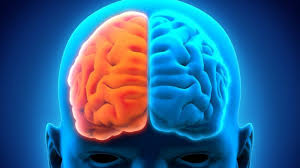
The images are found in the right hemisphere of our brain.
This is the center of our imagination, sensations and feelings. It is intuitive, synthetic.
If we have two cerebral hemispheres, it is important that we use the potential of each one, representing information through images and words.
What we will do is that the image and the word work consecutively or simultaneously, as the case may be.
In this way we will achieve a better memorization.
Example: if you imagine the word “book” proceed with the following steps:
1.-Think of a specific "book" (one that is in your bookcase or backpack etc.)
2.-Keep that particular book in your mind and add sensory elements to your thinking: The texture of the book, whether it is smooth or rough (touch); or imagine the smell of the pages of the book (smell), etc.
It is much more difficult for a multisensory represented image to be erased than one recreated through a single sense.
mental image exercise
In this initial exercise you will have to practice, independently, the development of each one of the senses.
Exercise is one way
In exercise number 6 (multisensory images) must use at least three senses for each word.
Example:
Cat: View (imagine the color of the cat)
Cat: Touch (imagine the texture and touching the cat)
Cat: Hear (Imagine the sound of barking)
Note: It should not take more than 5 seconds to imagine each word
•Darling
•Television
•Bed
•Desk
•Ceiling
•Grid
•Vase
•Wood
•Mango
•Milk
Pie
Glue
Guitar
Radio
Came
Smoke
Lightning
Bag

•Fly
•TV
•Hammer
•Music
•Water
•Guitar
•Rain
•Fan
•Lightning
•Bird

Message
Grid
Press
Goose
Radio
Wood
Vacuum cleaner
Car
Milk
iPad
•Mango
•Oil
•Pie
•Banana
•Lamp
•Tub
•Forest
•Flower
•Notebook
•Sheet

Acetone
Nail
Honey
Watermelon
Strawberry
Syrup
Cheese
Cushion
Program
Sugar
•Hat
•Umbrella
•Fiddle
•Door
•Wind
•Sun
•T-shirt
•Ring
•Chair
•Magazine

•Tomato
•Chocolate
•Watermelon
•Chicken
•Water
•Cheese
•Fish
•Sugar
•Avocado
•Milk

Water
library
Bed
piggy bank
Car
Hand
Highway
Tennis
Airplane
Helicopter
Tequila
Paper
Strawberry
Vanilla
Macadamiza
Orange
Doritos
Tuna
zucaritas
Butter
•Flag
•Living room
•Chair
•Bag
•Key
•Coffee
•Mrs
•Ring
•Refrigerator
•Marker

Flag
Living room
Chair
Bag
Key
Coffee
Mrs
Ring
Refrigerator
Marker
concrete and abstract words
Concrete word: If the word to be imagined belongs to the world of the object (chair, plate door, etc.)
The representation method is “direct”
Abstract word: If the word to be imagined belongs to the world of the concept (economy, conservation, etc.)
The rendering method is “indirect”
Example: Economy we represent it with a bundle of bills
“Conservation” can be represented by a refrigerator
“security” It can be represented with a policeman
Will: A person who perseveres
“Read” A library
“Observe” a microscope
"Success" a medal
“skill” A footballer (Messi)
“Communication” A cell phone
These are examples, they could be given another form of representation. But, in any case of abstract images, they must be specific, identified multisensorily.
¨For example, if we represent "Ability" with a soccer player, this player must be known, that is, with a specific player, imagine its texture, the sound it makes, etc.
The chosen image, whether it is a concrete or abstract word, must respect the principles that we handle in the subject of mental image, namely:
The chosen image, whether it is a concrete or abstract word, must respect the principles that we handle in the subject of mental image, namely:
1.- Multisensory image
2.-Specific Image
3.-experiential image
Unequivocal and mistaken images
An important requirement when representing an abstract concept is to choose a unique image.
Univocal image: Of a single meaning
IN such a way that when evoking the image, later, it allows returning to the same word.
In this way, when imagining the word “security”, we do it with a "policeman" in this way we will be making a univocal image.
If we imagine the same word with "goalkeeper" there is a risk of confusing the word with a "soccer goalkeeper"
You must be precise when representing an abstract concept, choosing one that has only one meaning.
Exercise
Exercise instructions:
You will have to practice, intensely, the elaboration of “images” (concrete or abstract).
A good skill in mnemonics lies in a rapid and fluid generation of mental images.
This exercise is one of the foundations for later exercises in the course.
Try to use as many senses for each word (sensory image)
Exercise:
•Bride
•Seat
•Minutes
•Finger
•Wizard
•Music
•Cat
•Hunter
Accounting
Company
Certainty
Recipe
Eyes
Action
Production
Airplane
Instructions for exercise 3
• You must practice the elaboration of "images" (concrete or abstract)
•Try to use as many senses for each word (multisensory image)
•In this case, it will be necessary to create images more quickly.
Exercise 3
•Window
•Cigar
•Palette
•Study
•Closing
•Watch
Armchair
Accomplice
Developing
Green
Subway
Creation
Unit 2
Association
It is the intellectual process to relate two images.
With the association you ensure long-term memory, since the isolated image of a concept, without being associated, does not leave a long-lasting mark.


associative systems
Associations are extremely important in the learning process; because they help to restructure perceptions according to the ends that each one fulfills.
In natural memory the associations are logical; but there are also artificial and illogical associations.
The advice is as follows:
If you want to memorize any type of information, do it using both mechanisms, because if one of the systems fails, being supported by the other, the risk of loss decreases.
The natural association of ideas for their understanding is the best guarantee of memory. This process is perfected if we check the result through active repetition.
This implies a mental effort very different from that of the simple reflector, since it detects weak points, errors, etc.
Actively repeating means:
Reconstruct aloud “in my own words” what is understood about a topic.
The association of ideas is based on words, and in this sense it is supported by the left hemisphere of the brain. Next we will see how to achieve a double effort.
In the presentation of ideas, in an organic framework, we add the function of the image, which is to give life to static and utilitarian concepts.
It can be said, then, that the association of ideas added to the association of images is the adequate formula for a good memorization.
Image Association Types
There are different ways to relate the images that we must remember.
spatial association
We put everything we need to remember in one place.
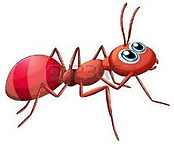
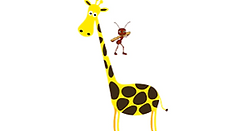
Example: If we associate an ant with a giraffe. The way to do this is by imagining the ant walking on the giraffe's neck.
Temporary:
We associate our image to time.
Example: If they mention to us that we should watch a soccer game and they will show it at 9:00 am. We imagine ourselves sitting in front of the television and through the window we can see the shining sun and the little birds sing.
It is dawn.
Likeness:
We associate the similar aspects of the objects or concepts to be related.
Example: To deliver an assignment you need a notebook and a pen, you can get both at the stationery store, we can imagine leaving the stationery store with the items in hand


Contrast
In the following, we will highlight the differences.
Example:
To remember two words, like ant and giraffe, we will visualize the huge ant and the tiny giraffe, so knowing that it would really be the opposite, we will remember more easily.

It is important to look for the right kind of association, depending on what we need to remember.
It is important, to systematize skills, to specialize in one type of association. The simplest and fastest is the spatial association.
The ant on the giraffe
When the concepts that we have to memorize are difficult or of a very deep level of abstraction, we can resort to illogical or implausible associations.
Example:
If I must associate "concentration" with "power", I can associate
A person focused on a super hero


Note: Image fusion should be avoided. That is to say, to convert two words into a single image, since the word that is represented will not leave a trace in the memory.
Example: Superman – run. Silos "merged into a picture of "Superman running" is an ERROR
If I associate Superman on an athletics track, it is correct


creative association
For example:
We must remember to go through the clothes to the dry cleaner when leaving work. We imagine putting away our things, covering the computer. We get up from the desk with a smile, we're done, we're going home. We take our card to check out, and surprise, it's not our card but the dry cleaning receipt. We can include the feeling of surprise that this could have caused us.
Here are exercises 1 and 2.
Exercise instructions 1
In this exercise two words will appear to associate with each other.
Remember to first create the mental image and then associate them with the techniques explained in the last topic.
You will achieve a good level of skill when you associate efficiently and quickly, even if the words have no connection to each other. At first it may seem difficult due to the short time it is proposed, but you must practice intensely until you achieve the skill of associating both images.
Example: Magazine – Sofa: Associate a known magazine supported by a known sofa.
Exercise 1
•Magazine-Oxygen
•Domino-Solution
•Walk-Toe
•Travel-Fridge
•Electricity-Sack
Disk-Summary
Broom-Car
Scandal – Tomato
Liquid-Cup
Lighter-Table
Association techniques
Association in sequence memory
This method is used to remember a list of words or elements in the order in which they have been said, and is used to memorize from the list of the super, to the number and name of the bones of the skeleton of an adult.
Most of the mnemonic methods are based on the handling of two specific skills:
Quick image creation
Association.


chain method
Why is method called in chain?
In Mnemonics, a practical and effective mechanism to memorize concepts in order is achieved through the "chain technique".
It is very useful in daily life, at school, at work etc.
From remembering a shopping list at the supermarket to memorizing the list of bones in the body.
What is the Chain Method technique?
It is the application of the image and the association in the form of links linked together.
To remember concepts in order we must keep in mind:
1.-Associate the words in pairs (two by two).
2.-Associate the first and last word of the sequence with the image of the SELF (of my person)


3.- It is important not to make stories or "stories", in such a way that when associating in pairs, we can reconstruct the "chain" from the bottom up or from the top down.
4.- The "I" is a mnemonic resource that we use because it allows the first and last words to be associated.
At the same time, the "I" becomes the guide of the sequence (we know how it begins and when we reach the end)
Example:
Boat – Sand:
I imagine myself getting on a boat.
Then I associate boat – Sand, and then “I” am standing on the sand.

5.- The union of the images must be quite creative, very creative and strong, with color, movement, sound, smell, as we have been saying in previous lessons, for any type of association.
Example: if we had to relate our cat or the neighbor's cat to a garden, we imagine the cat eating the grass in a familiar garden.

6.-We will relate the first word and the last word with ourselves (the image of "I" is the easiest to represent). This is done to avoid forgetting which is the initial word and which is the final one. Knowing that when we appear, we are in the presence of either the first or the last word in the chain. Also, if for some reason the sequence breaks at any of the words, I fall back to the last "I" and rebuild the string in reverse order (from bottom to top)


7.-Each association that is made, the previous one must be deleted, so when relating the second with the third word, the first must be deleted.
Example: A list of four words: chair, pen, eraser, blackboard.
We associate “chair” with ourselves: I am standing on the chair.
Then we associate chair with pen: the pen crosses the surface of the chair, then we associate pen with eraser, the word chair disappears. The pen sticks in the eraser. Then: the eraser begins to erase the board (the word eraser disappears). I have a small blackboard in my hand.
As each image is perceived, it must be repeated twice, when associated with the previous one and the later one begins. The same chair is the one that I associate with the “I” and the pen.
Now write the above list in order

8.- We must be careful not to build stories or scripts with the words, because we could not reconstruct them by changing their location and order, when necessary.
Let's not forget that the image of the objects or concepts should not vary at all, when repeated.
20 word example
Balloon
Mountain
Whale
Briefcase
Dolphin
World
Helicopter
Watch
Plumber
Focus
Glass
Astronaut
Mars
Spoon
Desk
weight
Fly
Pencil
Train
Butterfly
I am standing, a LAMP comes out of my head ("I" disappear) above the lamp a BRICKLAYER works, next to him appears a TELE, the mason disappears, while a PLANE passes through the TV, the plane flies until it passes next to a PLANET through which a FISH jumps directly towards a fountain that takes a DOLPHIN that climbs the MOUNTAIN through which an EAGLE passes
Phonetic Substitution
When you need to represent a word or concept of "unknown meaning" (example: Malavarismo) or a word that is denomination with a name (example: "Rio Nile" or a surname: Corneole) you must resort to "phonetic substitution"
Phonetic substitution: It is looking for a sound equivalent, which has phonetic similarity. In this situation the association is auditory.
Juggling can be replaced by: Mal- Var – Earthquake
Nile: Could be replaced by: Thread
Then memorize in chain using phonetic substitution, the following exercises.
Names of rivers in Europe: Phonetic substitution (example)
•Danube river -Deluge
•volga river -Olga
•Vistula River -View
•Dnieper River -Sniper
•Seine river -Dinner
•Rin River -rim rim
Exercise 1
Then make a phonetic substitution with the following list of Rivers of Mexico, it is important that the order in which they appeared is maintained.
Take a piece of paper or a notebook to do the following exercise
Perform phonetic substitution, and then chain memorize.
Start with the following exercises.
•Panuco River
•Usumacinta River
•Balsas River
•Grijalva River
•Suchiate River
• Lerma River
Exercise 2
Memorize with the chain method and apply the phonetic substitution of the following list of bones of the skeletal system, maintaining the order in which they appear.
•Humerus -Sacrum
•Radio -Ischium
•Ulna -Femur
•Premieres -Ball joint
•Ribs -Tibia
•Iliac
Write down the previous words in the order in which they were
Unit 4
Numerical Memory
memorization of numbers
Numbers are abstract words. They cannot be associated not represented by the methods seen so far.
It is necessary to be able to imagine and associate, to replace the number with an alphabetic code. In it, the numbers are codified in consonant letters, then they are articulated with vowels and a substitute "image code" of the number in question is formed.
Examples:
The number 3 is replaced by the consonant M
The number 2 is replaced by the consonant N
So the number 32 is encoded with the image of "Hand"
The following code is the one we suggest handling. Experience shows that it is the easiest to master.
0: We supplant it with r and rr, due to its phonetics in the word zero.
1: It will be replaced by T or D, since they have a stick that resembles the shape of one.
2: We represent it by the no ñ because they have two little legs
3: We will combine it by the m, it has three legs.
4: It will be replaced by the letter C (when it goes only to the vowels a,oyu) by K or Q. In this situation, we do not associate by its shape, but by its sound "K"
5: We will change it to L or LL, since L is equal to fifty in Roman numerals.
6: It will be replaced by c, before roi, and by soz, before all vowels. We associate it with the sound s.
7: We'll change it to F since it looks a lot like a backwards F. For the j for its shape and for the g, in front of e, i, that is, when it is pronounced as j.
8: We will relate it to the Ch, since it is the sound that predominates, when pronouncing the word eight. Also for the g, in front of a, oyu: well, the g looks like 8.
9: We will change it for the V, for its sound and for the pob: for its shape, similar to that of 9.
This system requires a bit of practice; but if you train regularly, the conversation will come easily to you. If you practice it more and apply it on a daily basis, you will learn it faster.
Substitutions are simply memory aids.
This system requires a bit of practice; but if you train regularly, the conversation will come easily to you. If you practice it more and apply it on a daily basis, you will learn it faster.
Substitutions are simply memory aids.
0: ro rr
1: all
2: no
3: m
4 c (using a,oyu), ko q.
5: I will
6: c (with eoi). S oz (with all vowels)
7: fo j and g when used with eo i.
8: ch and g with the vowels a, o and u.
9: v, p and b
If you wish, you can create your own numerical code, guided by the following rules:
change schema
1.- Choose specific words. Example: if we want to learn and memorize the number 17, we will replace it with the word teja, since f is equal to 1 and j is equal to 7.
2.-The h is silent, it can be used as a wild card. Example: To remember the number 8 we will think of an ax, since ch is equal to 8.
3.- You can use names, acronyms, brands or nicknames.
Example: 55 can be associated with lili or 6 with the CIA
4.- The vowels do not represent any number, you can combine them with the consonants as you find most useful to help form them.
Example: Ojo, ajo or aji, all are alternative forms of the number 7.
Practice until you memorize the numerical code well. Then try to build words, combining the consonants that represent each number with words.
Example: The 00 can be replaced by blacksmith or muleteer. The 6 for bear or USA
List of examples with images with the numbers from 00 to 09 and from 0 to 100. You can modify it so that it responds to images that facilitate evocation, either by other words, expressions or more familiar names, according to your own experiences.
Example: The 12 that is tub can be replaced by donut, toño or tuna.
Now you can enter the suggested “number code”.


Fish
Dog

Cat

Mountain
Memorization of digits
When you need to memorize figures, you should follow this procedure:
12262218132516112029
Divide the number into pairs (12-26-22-etc.) Encode the images of each pair of numbers and apply the chain technique (I have a donut, a nut is left over for the donut, etc.), closing the chain associating 29 (snow) with I,0.
Practice with the following figures:
34465336404933514530
509526835977474314
30928174653036013681
hitch method
You already know the Chain Method and you have also practiced the numerical code.
This Method consists of remembering a list of words and also knowing the exact order in which each of them is found.
The chain method allows us to remember the words in an established order, that is, relating each of the following, and the first and the last, with ourselves. It has a limitation. It does NOT allow us to remember the order number that corresponds to each word.
Example:
1.-Dog
2.-Stair
3.-Speed
4.-Basket
5.-Postman
6.-Dove
7.-Window
8.-Phone
1: Tea: We associate: tea is drunk by the dog.
2: The nail sticks in the ladder.
3: Smoke: We imagine the speed as a racing car, the car smoke comes out.
4: Goose. The goose is inside a basket.
5: Wing The Wing is on the postman's back.
6: Bear The Bear takes the pigeon with his paws
7: Eye. The eye looks out the window.
8: Axe: The ax breaks the phone
Once these associations are created, we are able to say in what order each word is found. If we are asked what location the word "Window" has, we remember that the eye looks out of the "window", therefore the window is the word number seven.
This is the logic of the system that puts us in a position to carry out this memory demonstration with more and more words, as practice increases.
Applications
Below you will find lists of words with their corresponding order number so that you can practice this new method.
1.-Headquarters 6.-fever
2.-Phosphorus 7.-Plastic
3.-Metal 8.-Eye
4.-Direct 9.-Children
5.-Calls 10.-Chair
What words correspond to the numbers, 10 and 4?
What numbers correspond to children, to barracks and to metal?
1.-Door 9.-Automobile
2.-Fire 10.-Show
3.-Tomato 11.-Branch
4.-Cheese 12.-Charge
5.-Survey 13.-Red
6.-Finger 14.-Kindness
7.-Pentagram 15.-Main
8.-nightstand
What words correspond to the numbers 6,15,8 and 2?
What numbers correspond to the words goodness, branch, tomato and red?
1.-idol
2.-Alligator
3.-Guitar
4.-Ingratitude
5.-Madness
6.-Uterus
7.-Salad
8.-Wave
9.-Joy
10.-Taste
11.-Rock
12.-Seal
13.-Thimble
14Survey
15.-Blue
16.-Kilo
17.-Shyness
18.-Oven
19.-Receiver
20.-Life
What words correspond to the numbers 6 to 20, 18, 11 and 18?
What numbers correspond to the words survey, joy, guitar and kilo?
Applications
Law applications
Suppose we have to memorize the content of all the paragraphs of the Argentine commercial code
In this example, we must associate as follows:
A) Select each item a word "keyword"
B) Associate said “key” with the numerical code.
Example:
Subsection 1) I associate TÉ with the keyword “change”
Paragraph 2) I associate NAIL with "bill of exchange"
The chosen word must allow us to remember the other data because we must bear in mind that the hooking technique, like the others explained, is applied after analyzing and studying the subject.
1) Any exchange, bank, brokerage or auction operation.
2) Any negotiation on bills of exchange or squares, checks to anyone.
3) Companies of factories, commissions, purchase and sale of ships, rigging, provisions and everything related to maritime trade.
4) Insurance and corporations, whatever the purpose.
5) Chartering, construction, purchase and sale of ships, rigging, provisions and everything related to maritime trade.
5) The operations of the factors, bookkeepers and other employees of merchants as far as the trade of the merchant on whom it depends is concerned.
7) Conventions on salaries of dependents and other employees of merchants.
8) Letters of credit, bonds, pledge and other accessories of a commercial operation.
9) The acts specifically legislated by the commercial code.
Memorize the remaining paragraphs of this article
Art.27 (of the commercial code). The merchant's registration must be made in the commercial registry, presenting the petition petition that contains:
1°Your name, state and nationality, and being a company, the names of the partner and the adopted company signature.
2° The designation of the quality of the traffic or business.
3° The place or address of the establishment or office.
4° The name of the manager, factor or employee who becomes the head of the establishment.
Memorize the paragraphs of this article
One of the most serious problems facing the student of history is remembering names, dates, and facts. We will show how this is simplified using the following methods.
Example: Memorize events and dates:
Assassination of President Kennedy: November 22, 1963
We associate: The dead president next to a 22-year-old boy, the boy has a die (11) and the die on top of a mountain (63)
French Revolution: July 14, 1789
Association: The Eiffel Tower (image of France), 14 (taco) July (month7-eye) and 1789 (tile – sheet metal).
how to remember phone numbers
Practice with the following numbers
Pedro 52 44 29 87
Garcia 58 13 96 54
Martha 52 05 40 40
Michael 57 73 97 12
Francisco 53 14 34 27
Remember streets and ages
The same method is used, associating the person with their name, as we saw in the previous Unit, their age and the street where they live.
Example: Pérez is forty years old and lives in Brazil 2011
The chain would look like this: ME talking to Pérez (we imagine the person's face, with a PEAR drawn on the chin). Pérez is on the CAR, in the car there is a BANANA: the banana is in NORA's hand and Nora has a DICE, I take the die.
Practice with the following examples:
Ana is 15 years old, lives in Rayón 20
Mónica Martello is 32 years old and lives at Moreno 765, 4th floor, department C
Andrés Ramírez is 55 years old and lives in San Martín 1453
Unit 5
Mnemonic Resources
keyword association
This resource is used to memorize a limited number of data.
The key word is a “spring word”, which, due to its evocation, allows the data to be memorized to be easily reconstructed.
When you need to memorize between 3 and 10 facts, take the first letter or the first syllable of each concept and form a “mnemonic key word”. Example: If element X has three characteristics: Caloric, luminous and measurable, form a mnemonic keyword with calumen.
Example: Form keyword with:
the fo- TRA sgos - NI nfas ELTRANI
TRO lls- FA ntasmas TROPHY
association by agnostic
This resource is applied when it is required to memorize a lot of data
(more than 10). You must take from each data to retain, the first letter or syllable, and instead of forming a "key word". SE must form one or more sentences.
Examples: With the periodic table of elements of chemistry
When reading the table from left to right, to memorize the order of the elements, it is formed with the following sentence: Today's H corresponds to HYDROGEN.
Today I have liberated Baja California Norte
H = Hydrogen
He = Ice
Libe = Lithium / Beryllium
B = boron
C= Carbon
N = Nitrogen
Continue making other sentences with the remaining elements of the table.
RECOMMENDATIONS: It doesn't matter if the “acrostic phrase” doesn't make logical sense. The important thing is that it has a correct syntax.
In each "invented" phrase, you may or may not incorporate the same number of elements (an acrostic may include 8 data and another 5 or 10 data)
As a generic recommendation, apply these resources after studying or analyzing them.
The sentence must have syntactic order. It must be easy to remember even if it is illogical or implausible.
Practice this resource with other related topics.
Memorizing faces and surnames
To remember a person's surname we will use the phonetic association and substitution procedure.
The surname is generally a NON-SIGNIFICANT term.
(Nunes, pomfiroli, etc.)
In mnemonics, you must replace or convert the last name you want to remember, into a specific word and associate it with the person's face or performing some action related to the replaced term.
Pérez can be represented with a pear.
Herrera, the person working in iron
Mondragón, we imagine it with a dragon
Escamilla, with a giant scale.
Stagger, climbing a ladder.
Crowning, with a crown on his head.
Leyva, with the constitution in his hand (laws)
Let's see other examples, and then do the exercise of faces and surnames
Instructions for the exercise of faces and surnames
Next, select some faces and add a name to them and then memorize the names and put the faces without the name and see how many you can remember.
drawing of ideas
graphosynthesis
What is GRAPHOSYNTHESIS?
Graphosynthesis is the graphic representation of an object or idea drawing the essential features that allow us to recognize it.
The features are:
A) Simple and complete strokes: the representation is schematic, it does not seek aesthetics.
B) Personal: We will graph the ideas with features that allow us to recognize them and not necessarily others.
C) They must have a suitable size for the contents to be represented.
An example of Graphosynthesis is the traffic signal, only the features used are not personal. They have been generalized, so that everyone can understand it.
For example, if we see a sign And it is understood that you cannot park in that place.
If we look at the drawings of young children, we will find the three characteristics of graphosynthesis: simple lines, they do not seek aesthetics, but rather the representation of reality. They are personal, sometimes too much, only they know what they wanted to represent, the size corresponds to what they wanted to reflect.
The child learns to draw before writing. When he grows up he can make more objective images, until he comes to represent sounds on paper (the written word is the representation of the sounds we pronounce).
The objective here is to return to being children, to exercise drawing, to create complementary figures of our perceptions of memory. It is another way of relating image and word.
With practice, we will gain confidence and we will be able to progressively transform words and phrases into drawings with few strokes, but rich in meaning.
We must create and/or adapt graphosynthesis to the details of our profession or work. Therefore, the guide that I include later is just an example and should serve as a basis for a better understanding of the method.
In graphosynthesis, it is necessary to highlight its basic elements of a concept, taking care that they do not stand out more than the accessories.
Graphosynthesis does not replace the mental process of elaboration of ideas or reasoning, but it is a method that complements it to make the interpretation clearer.
Finally, let us emphasize that the complete cycle that the use of graphosynthesis has is:
1.-Reading the concept
2.-Approach to interpretation.
3.-Breakdown of the basic and accessory elements of the concept.
4.-Graphic representation of each component and relationship with the others.
5.- Mental reconstruction of the concept.
6.-Mental addition of details, movement, color, noise, action, etc., to favor your mental situation.
7.-Verification and reinforcement of the latter by means of the repetition of the concept.
8.-Reinterpretation of graphosynthesis, already recorded in the mind (this time without looking at the drawing made on paper)
development and applications
We will now go from the simplest to the most elaborate.
What will be shown below are examples, ideas that as such, should not necessarily be adopted as fixed rules, on the contrary, the ideal would be that you use them as guides to master the method, then elaborating your own creations.

Christmas
(by the tree)

Builder
(for the dough)

Waiter
(for the tray)
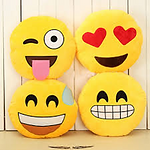
Happy, in love etc...

Above

Down

Astronaut
(for the suit)
Other languages
The languages of other countries are difficult for many people to learn as they have nothing to do with their first language.
The sound and its meaning
We get into the habit of wondering if the sound of the foreign word reminds us of something in our language.
When we catch a new sound or a new word, we try to catch its correct pronunciation by associating it with some word of our language.
Example: The word house is pronounced House, the association What we could do is an Indian waving to enter a house.
To improve start by choosing simple names.
To learn a vocabulary, start with 5 words, then 10, then 20, and so on.
Study the pronunciation with someone who knows the language well.